
FTSE 100 and Wall Street Slip as Geopolitical Tensions Drive Market Uncertainty
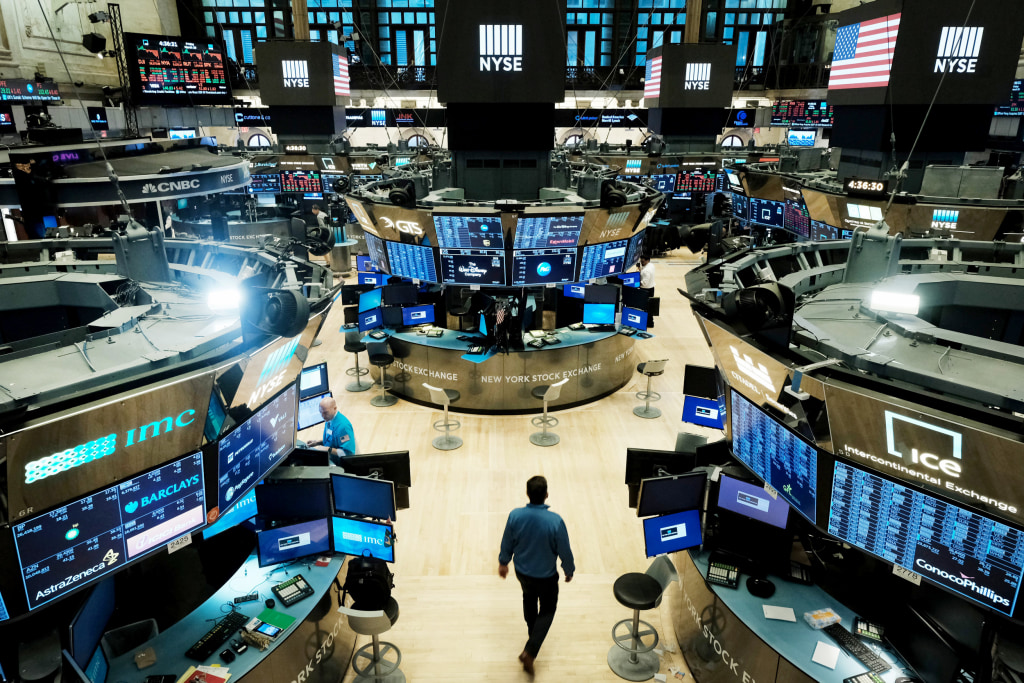
Global equity markets moved lower on Tuesday as investors reacted cautiously to rising geopolitical tensions involving Donald Trump and Iran. With a critical deadline approaching around the reopening of the strategically vital Strait of Hormuz, traders are bracing for potential volatility across equities, currencies, and commodities.
Markets Edge Lower Ahead of Key Deadline
The UK’s flagship index, the FTSE 100, slipped by 0.4% during afternoon trading, reflecting broader risk-off sentiment across Europe and the US.
Across the continent, performance was similarly subdued:
- Germany’s DAX fell 0.3%
- France’s CAC 40 remained largely flat
- The pan-European STOXX 600 dropped 0.3%
Meanwhile, US markets also pointed lower:
- The S&P 500 declined by 0.3%
- The Nasdaq Composite fell 0.5%
- Dow Jones Industrial Average futures were down 0.6%
This broad-based weakness highlights the uncertainty gripping global markets.
Oil Prices Surge on Supply Concerns
Oil markets reacted sharply as the geopolitical situation intensified. The Strait of Hormuz is one of the world’s most critical oil chokepoints, and any disruption can have immediate global implications.
- Brent crude climbed 0.4% to $110.15 per barrel
- West Texas Intermediate (WTI) surged 2.5% to $115.27 per barrel
Rising oil prices often act as a headwind for equity markets, increasing inflationary pressures and dampening investor sentiment.
A “Binary Event” for Investors
According to Richard Hunter, head of markets at Interactive Investor, markets are currently facing a highly uncertain scenario.
He described the situation as a “binary event” — meaning outcomes are sharply divided between:
- A potential ceasefire and easing tensions
- Or further escalation, which could disrupt global energy supplies
Much of the market movement is being driven by unconfirmed reports and speculation around negotiations, making short-term direction difficult to predict.
Currency Markets Hold Steady
Despite volatility in equities and commodities, the British pound showed resilience. Sterling remained steady against the US dollar, trading around $1.3244.
This relative stability suggests that, for now, currency markets are waiting for clearer direction before making significant moves.
What Traders Should Watch Next
For traders, this type of environment is exactly where opportunity and risk go hand in hand. Key factors to monitor include:
- Any official developments regarding the Strait of Hormuz
- Changes in oil prices, which can drive broader market sentiment
- US policy announcements and geopolitical updates
- Continued volatility in global indices
Periods like this often reward disciplined, trend-based strategies rather than reactive trading.
Key Takeaway
Markets are currently being driven less by economic data and more by geopolitical developments. With a clear “risk-on vs risk-off” dynamic in play, traders should remain cautious, focused, and prepared for rapid shifts in sentiment.
0 Comments